
Industry Specific Odour Control Solutions: What Works in Each Sector

Written By
Admin
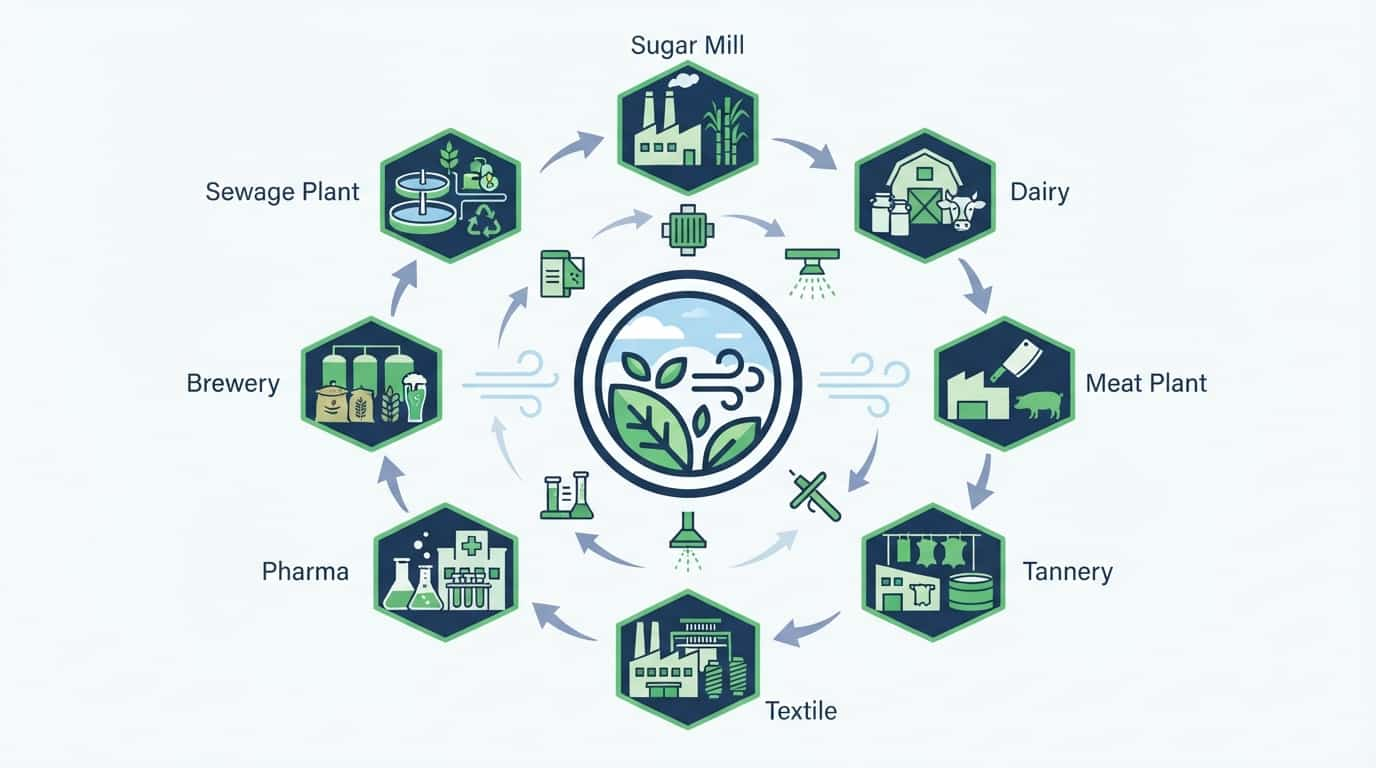
Industry-specific odour control solutions match the treatment method to the smells produced by each sector. Amalgam Biotech works with different industries and understands that one product rarely fits every odour problem. Wastewater, organic waste, chemical emissions and process gases can all create unpleasant smells, but their sources and treatment requirements vary.
This guide explains the common odour problems across industries and the practical solutions businesses can use to manage them effectively.
Why One Size Does Not Fit All
A sugar mill may experience sour odours from fermentation and wastewater, while a tannery may release sulphur compounds. Dairy facilities often struggle with decomposing milk residues, and chemical plants may produce odours from solvents or process gases.
Using the same treatment method everywhere can increase costs without delivering consistent results. Industry-specific odour control solutions focus on identifying the actual source, understanding the compounds responsible and selecting the appropriate treatment method.
Sugar Mills and Distilleries
Sugar mills and distilleries commonly experience sour and fermented odours from spent wash, process wastewater and anaerobic lagoons. High organic loads and uncontrolled anaerobic conditions can intensify these smells.
Maintaining suitable pH, improving aeration in aerobic treatment systems and applying specialised bacterial cultures can help reduce organic accumulation and odour formation. Lagoon management and appropriate covers can further limit emissions.
Dairy and Beverage Industries
Milk residues, whey, fermented liquids and organic deposits in drains can create persistent sour odours. These problems often become worse when wastewater remains stagnant or cleaning schedules are inconsistent.
Removing milk residues promptly, maintaining drainage systems and preventing organic waste accumulation are effective first steps. Biological dosing in effluent tanks and drain systems can help break down organic matter responsible for recurring odours.
Meat, Poultry and Fish Processing
Blood, fats, offal and other organic residues can release ammonia and sulphur-containing gases during decomposition. Waste storage areas, processing floors and wastewater collection points are common odour sources.
Keeping waste covered, maintaining appropriate storage temperatures and removing organic residues regularly can reduce decomposition. Odour neutralisers may provide immediate relief in waste handling areas, while biological treatment helps manage organic loads in wastewater systems.
Tannery and Leather Processing
Tanneries frequently experience strong odours associated with sulphide compounds, ammonia and organic residues. These emissions can originate from processing operations, wastewater streams and sludge handling areas.
Separating sulphide-rich wastewater streams, maintaining suitable treatment conditions and covering odour-generating tanks can improve control. Chemical oxidation, scrubbers and appropriate biological treatment may be required depending on the source and emission levels.
Textile and Dyeing Industries
Textile processing and dyeing facilities can generate chemical, sour and wastewater-related odours. These problems may arise from dyeing operations, chemical storage, sludge accumulation and effluent treatment tanks.
Maintaining suitable pH, improving aeration where required and removing accumulated sludge can help prevent odour formation. Neutralisers and air treatment systems may also be useful during periods of increased emissions.
Pharmaceutical and Chemical Industries
Pharmaceutical and chemical manufacturing facilities may release odours from solvents, sulphur compounds and other process chemicals. Different compounds require different treatment methods, making source identification particularly important.
Capturing emissions near their source, separating incompatible wastewater streams and selecting suitable scrubbers or activated carbon filters can improve odour management. Treatment systems should be selected according to the chemical composition and operating conditions.
Paper and Pulp Industries
Pulp and paper manufacturing can produce sulphur-related odours and emissions from organic wastewater. Sulphide compounds, process residues and poorly managed treatment systems may contribute to persistent smells.
Suitable oxidation methods, improved aeration and wastewater process control can help reduce odour formation. Covers and exhaust air treatment systems may be required around high-emission process areas.
Municipal and Residential STPs
Sewage treatment plants commonly experience hydrogen sulphide and ammonia-related odours from wastewater collection, sludge handling and anaerobic conditions.
Maintaining treatment efficiency, preventing stagnant wastewater and controlling sludge accumulation are important preventive measures. Biological dosing, tank covers and activated carbon filters can help manage odours depending on the source and severity.
Waste Management and Composting Yards
Decomposing organic waste produces mixed gases that can create strong odours around composting facilities and waste handling areas.
Proper pile turning, moisture management, suitable aeration and controlled waste storage help prevent excessive odour formation. Biological products and neutralisers may support odour management in open areas and around waste processing operations.
Breweries and Fermentation Units
Breweries generate odours from yeast residues, spent grain, fermentation processes and organic wastewater. These smells can become particularly noticeable around waste storage and effluent treatment facilities.
Removing spent grain promptly, maintaining wastewater treatment conditions and preventing organic accumulation are effective measures. Biological treatment can support organic matter breakdown and help control recurring wastewater-related odours.
Fertiliser and Chemical Manufacturing Units
Fertiliser and chemical plants may release ammonia, sulphur compounds and other process-related gases. These emissions can affect workers, surrounding areas and plant operations when poorly controlled.
Source capture, suitable scrubbers and effective separation of wastewater streams are important control measures. Treatment methods should be selected according to the specific gases involved and the required emission control levels.
Odour Control Technologies Used Across Industries
Most facilities require a combination of treatment methods rather than a single product.
- Biological dosing: Helps break down organic matter responsible for odours in wastewater, drains and treatment tanks.
- Odour neutralisers: Provide quicker odour reduction in open areas, waste handling zones and selected process locations.
- Activated carbon filters: Capture suitable gaseous compounds from enclosed spaces and exhaust air.
- Biofilters: Treat certain odorous compounds through biological activity in air treatment systems.
- Chemical scrubbers: Remove selected gases from exhaust air using suitable chemical treatment.
The correct combination depends on the source, gas concentration, operating conditions and treatment objectives.
Conduct an Odour Audit Before Choosing a Solution
A practical odour audit identifies the major emission points, the compounds involved and the conditions under which smells become noticeable. It also helps determine whether the problem originates from wastewater, process operations, waste storage or exhaust air.
This assessment allows businesses to prioritise high-impact sources and avoid spending money on unsuitable products. Working with an experienced odour control supplier can help identify practical treatment options based on the facility's requirements.
Cost and Return on Investment
Odour management costs include products, equipment, maintenance and labour. However, recurring complaints, inspection issues, operational disruptions and poor working conditions can also create financial pressure.
Industry-specific odour control solutions can reduce unnecessary trial-and-error spending by addressing the actual source. Regular monitoring and preventive maintenance also help businesses maintain consistent results over time.
How to Select the Right Odour Control Solution
Start by identifying the source and the gases responsible for the smell. Biological treatment may suit organic wastewater odours, neutralisers may provide short-term relief in open areas, and scrubbers or filters may be needed for exhaust air.
Evaluate treatment requirements, operating conditions and previous performance data before selecting a solution. Amalgam Biotech provides specialised bioculture products and odour management solutions for different industrial applications.
Conclusion
Industry-specific odour control solutions work by targeting the actual source and compounds responsible for unpleasant smells. From wastewater treatment plants and dairies to tanneries and chemical facilities, every industry requires an appropriate approach.
Conduct an odour audit, select suitable treatment methods and monitor performance regularly. Learn more about industry-specific odour control solutions or contact Amalgam Biotech to discuss an odour management plan for your facility.