
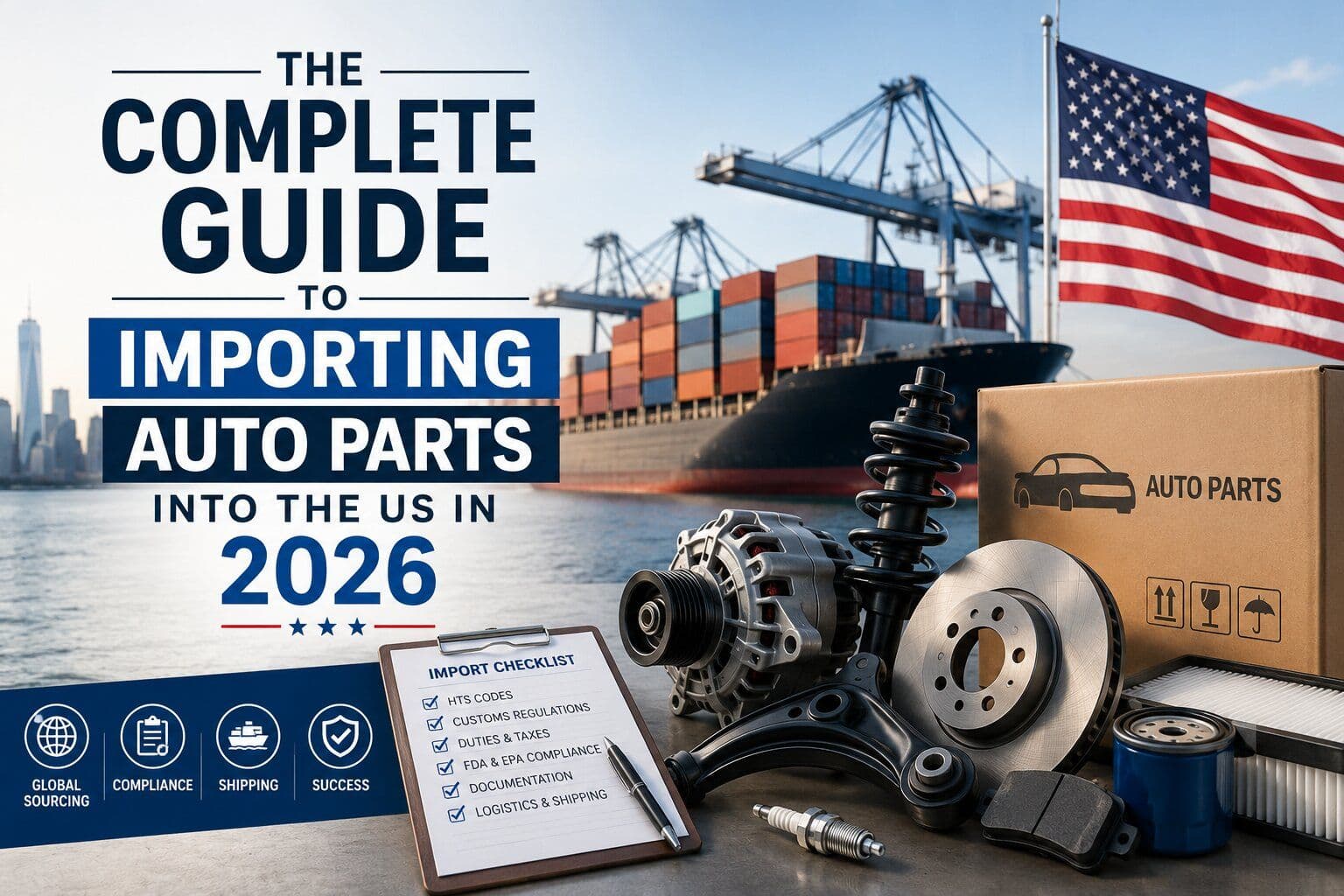
The Complete Guide to Importing Auto Parts into the US in 2026

Written By
Admin
The automotive industry depends heavily on global trade. Every year, millions of vehicle components cross international borders to meet the demands of manufacturers, repair shops, dealerships, and consumers. As vehicle technology continues to evolve, businesses increasingly look overseas to source quality parts at competitive prices.
For companies entering this market, understanding the process of importing auto parts into US markets is essential. While importing can create opportunities for growth and profitability, it also involves regulations, documentation requirements, compliance standards, and logistics considerations.
In 2026, global supply chains continue to change due to technological advancements, shifting trade policies, and increasing consumer demand. Businesses that understand these changes can position themselves for long-term success.
This guide explains everything you need to know about importing auto parts into US markets, from finding suppliers to clearing customs and maintaining compliance.
Why the US Auto Parts Market Continues to Grow
The United States remains one of the world's largest automotive markets.
Several factors contribute to strong demand for imported auto parts:
- A large number of vehicles on the road
- Growing demand for replacement parts
- Expansion of electric vehicle adoption
- Increasing vehicle customization trends
- Aging vehicle populations requiring repairs
Many businesses source parts internationally because global suppliers often offer wider product selections and specialized manufacturing capabilities.
As a result, importing auto parts into US markets remains an important business activity for distributors and retailers alike.
Understanding the Types of Auto Parts That Can Be Imported
Auto parts cover a wide range of categories.
Common examples include:
Engine Components
These include:
- Pistons
- Cylinder heads
- Fuel injectors
- Gaskets
- Turbochargers
Electrical Components
Examples include:
- Sensors
- Wiring harnesses
- Batteries
- Alternators
- Control modules
Suspension and Steering Parts
Common imports include:
- Shock absorbers
- Ball joints
- Control arms
- Tie rods
Brake System Components
Frequently imported products include:
- Brake pads
- Rotors
- Calipers
- Brake lines
Each category may have different compliance requirements depending on its intended use and regulatory classification.
Researching Market Demand Before Importing
Before sourcing products, businesses should understand what customers actually need.
Market research helps identify:
- High-demand products
- Emerging automotive trends
- Competitive pricing opportunities
- Seasonal demand fluctuations
Successful businesses often analyze:
- Online marketplaces
- Industry reports
- Repair shop demand
- Vehicle ownership trends
This research helps reduce inventory risks and supports better purchasing decisions.
Finding Reliable International Suppliers
One of the most important steps in importing auto parts into US markets is selecting trustworthy suppliers.
Strong suppliers typically offer:
- Consistent product quality
- Transparent communication
- Reliable shipping schedules
- Proper certifications
- Manufacturing experience
When evaluating suppliers, businesses should request:
- Product samples
- Quality certifications
- Manufacturing details
- Reference customers
- Inspection reports
Supplier selection directly impacts long-term success.
Understanding US Import Regulations
Import regulations exist to protect consumers, businesses, and public safety.
Many automotive products must comply with standards established by government agencies.
Key considerations include:
- Product safety requirements
- Labeling regulations
- Documentation standards
- Customs compliance
Businesses involved in importing auto parts into US markets should stay updated on current regulations to avoid delays and penalties.
The Role of Customs and Border Protection
US Customs and Border Protection (CBP) oversees imported goods entering the country.
Its responsibilities include:
- Reviewing import documentation
- Assessing duties and taxes
- Enforcing trade laws
- Verifying compliance requirements
Accurate documentation is essential for smooth customs clearance.
Even minor errors can lead to delays, inspections, or additional costs.
Essential Documents Required for Importing
Several documents typically accompany imported shipments.
Common examples include:
Commercial Invoice
This document provides information about:
- Products
- Quantities
- Prices
- Supplier details
Packing List
A packing list identifies:
- Shipment contents
- Package quantities
- Weights and dimensions
Bill of Lading
This serves as a transportation contract and shipping receipt.
Entry Documentation
Importers submit entry information to customs authorities for processing.
Accurate documentation helps avoid costly delays during importing auto parts into US transactions.
Understanding Tariffs and Duties
Imported products may be subject to tariffs and duties.
These costs vary depending on:
- Product classification
- Country of origin
- Trade agreements
- Applicable regulations
Businesses should calculate these expenses before placing orders.
Failure to account for tariffs can significantly impact profitability.
Choosing the Right Shipping Method
Transportation plays a major role in import operations.
The most common options include:
Ocean Freight
Advantages:
- Lower costs
- Suitable for large shipments
Challenges:
- Longer transit times
Air Freight
Advantages:
- Faster delivery
- Better for urgent shipments
Challenges:
- Higher transportation costs
The best choice depends on shipment size, urgency, and budget.
Understanding Product Classification
Every imported product receives a classification code.
Proper classification determines:
- Applicable duties
- Regulatory requirements
- Trade restrictions
Incorrect classifications may result in:
- Delays
- Fines
- Additional inspections
Businesses involved in importing auto parts into US markets should ensure accurate product classification from the beginning.
Quality Control Matters
Product quality directly affects customer satisfaction and business reputation.
Many importers implement quality control processes before shipment.
Common quality measures include:
- Factory inspections
- Product testing
- Sample evaluations
- Third-party audits
Investing in quality assurance often prevents larger problems later.
Working With Customs Brokers
Many businesses hire customs brokers to simplify import procedures.
Customs brokers assist with:
- Documentation preparation
- Customs filings
- Compliance requirements
- Duty calculations
Their expertise can reduce administrative burdens and help shipments move more efficiently through customs.
Managing Supply Chain Risks
Every import operation faces potential risks.
Examples include:
- Shipping delays
- Supplier issues
- Port congestion
- Regulatory changes
- Currency fluctuations
Successful businesses develop contingency plans to manage these challenges.
Risk management becomes increasingly important when importing auto parts into US markets on a large scale.
Inventory Planning and Forecasting
Inventory management helps balance product availability with storage costs.
Poor forecasting can result in:
- Overstock situations
- Stock shortages
- Increased expenses
Businesses often use historical sales data and market trends to improve forecasting accuracy.
Strong inventory planning supports better customer service and profitability.
The Importance of Supplier Relationships
Long-term supplier relationships create several advantages.
Benefits include:
- Better communication
- Improved pricing opportunities
- Consistent product quality
- Faster problem resolution
Strong partnerships often contribute to smoother importing operations over time.
Sustainability Trends in Auto Parts Importing
Environmental concerns continue influencing global trade.
Many automotive businesses now evaluate suppliers based on:
- Sustainable manufacturing practices
- Packaging efficiency
- Waste reduction efforts
- Environmental certifications
Sustainability increasingly affects purchasing decisions throughout the automotive industry.
Technology Is Changing Global Trade
Technology continues transforming the importing process.
Modern tools help businesses:
- Track shipments
- Monitor inventory
- Analyze supplier performance
- Improve forecasting
- Manage compliance
Digital solutions create greater visibility throughout supply chains and improve operational efficiency.
Common Mistakes New Importers Make
Many first-time importers encounter avoidable challenges.
Common mistakes include:
Choosing Suppliers Based Only on Price
Low prices may come with quality concerns.
Ignoring Compliance Requirements
Regulatory violations can create expensive problems.
Underestimating Shipping Costs
Transportation expenses can significantly affect margins.
Poor Documentation
Documentation errors frequently cause customs delays.
Avoiding these mistakes improves the chances of successful import operations.
How Electric Vehicles Are Influencing Auto Parts Imports
Electric vehicle adoption continues growing across the United States.
This trend increases demand for:
- Battery components
- Charging system parts
- Electronic control systems
- Specialized sensors
Businesses focused on importing auto parts into US markets should monitor EV-related opportunities closely.
Building a Long-Term Import Strategy
Successful importing requires more than finding products and shipping them.
A strong strategy typically includes:
- Reliable supplier partnerships
- Compliance management
- Market research
- Inventory planning
- Risk mitigation
Businesses that approach importing strategically often achieve more sustainable growth.
Future Outlook for Auto Parts Imports in 2026
The automotive industry continues evolving rapidly.
Several trends are expected to shape the future:
- Growth in electric vehicles
- Increased digitalization
- Supply chain diversification
- Greater focus on sustainability
- Expanded global sourcing opportunities
Companies that stay informed and adaptable will be better positioned to succeed.
Final Thoughts
The process of importing auto parts into US markets offers significant opportunities for businesses willing to invest time in planning and compliance.
Success depends on understanding regulations, selecting reliable suppliers, maintaining product quality, and managing logistics effectively.
While importing may seem complex at first, businesses that follow structured processes can reduce risks and improve operational efficiency.
As the automotive industry continues evolving in 2026, informed importers will remain well-positioned to meet customer demand, navigate changing regulations, and capitalize on new market opportunities. By focusing on preparation, compliance, and long-term strategy, businesses can build a strong foundation for successful auto parts importing operations.