
Types of Nuts: A Complete Guide to Fastener Nut Varieties

Written By
Admin
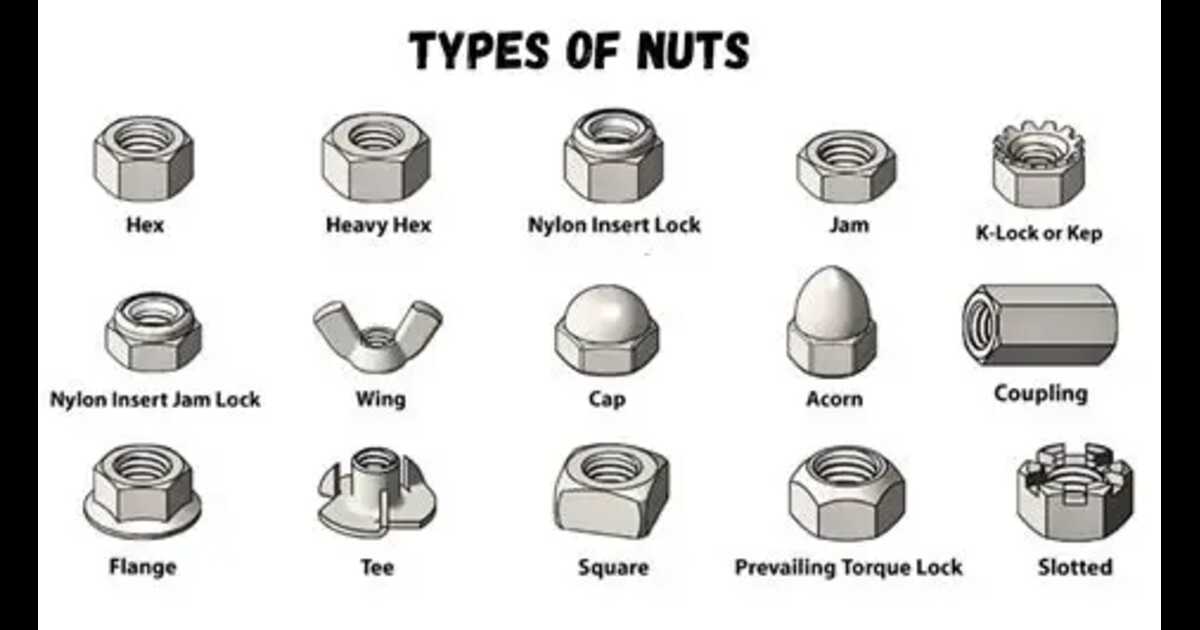
Fastener nuts are among the most essential components in mechanical assemblies, construction projects, automotive systems, and industrial machinery. While bolts and screws often receive most of the attention, nuts play an equally important role by securing threaded fasteners and maintaining the integrity of assembled parts. Selecting the correct type of nut helps ensure safety, durability, and reliable performance under various operating conditions.
This guide explores the most common types of fastener nuts, their characteristics, materials, and typical applications to help professionals and DIY enthusiasts make informed decisions.
What Are Fastener Nuts?
A fastener nut is a threaded component designed to mate with a bolt or threaded rod. Together, the nut and bolt create a clamping force that securely joins two or more materials. Nuts come in numerous shapes and designs, each engineered to meet specific requirements such as vibration resistance, corrosion protection, load distribution, or ease of installation.
Choosing the right nut depends on several factors, including the working environment, applied loads, material compatibility, and maintenance requirements.
Common Types of Fastener Nuts
1. Hex Nuts
Hex nuts are the most widely used type of fastener nut. Their six-sided shape allows easy tightening with standard wrenches or sockets.
Common applications include:
- Structural steel connections
- Machinery assembly
- Automotive components
- General construction
- Equipment maintenance
Hex nuts are available in various strength grades and materials, making them suitable for both light-duty and heavy-duty applications.
2. Lock Nuts
Lock nuts are designed to resist loosening caused by vibration or repeated movement. They incorporate special locking features that maintain clamping force even under dynamic conditions.
Popular locking mechanisms include:
- Nylon insert locking rings
- All-metal locking designs
- Deformed thread construction
Lock nuts are commonly used in:
- Vehicles
- Industrial machinery
- Aircraft equipment
- Agricultural equipment
- Power transmission systems
3. Wing Nuts
Wing nuts feature two large wings that allow tightening and loosening by hand without requiring tools.
Their convenience makes them ideal for:
- Temporary assemblies
- Adjustable fixtures
- Photography equipment
- Furniture
- Exhibition displays
Although easy to install, wing nuts are generally not recommended for high-load structural applications.
4. Cap Nuts (Acorn Nuts)
Cap nuts feature a domed top that completely covers the exposed end of a bolt.
Advantages include:
- Improved appearance
- Protection against corrosion
- Reduced injury from exposed threads
- Prevention of thread contamination
They are frequently found in decorative metalwork, bicycles, playground equipment, and consumer products.
5. Flange Nuts
Flange nuts include an integrated washer-like base that distributes clamping force over a larger surface area.
Benefits include:
- Reduced risk of material damage
- Better load distribution
- Faster installation
- Improved resistance to loosening
These nuts are widely used in automotive manufacturing, heavy equipment, and industrial machinery.
6. Coupling Nuts
Coupling nuts are elongated nuts used to connect two threaded rods into a longer assembly.
Typical applications include:
- Structural bracing
- Suspension systems
- Electrical conduit supports
- Construction projects
Their extended length provides increased thread engagement for enhanced strength.
7. Square Nuts
Square nuts were once the standard before hex nuts became more common.
Their larger contact surface offers several benefits:
- Better grip
- Improved resistance to rounding
- Easy installation in confined spaces
Square nuts are still widely used in restoration projects, rail systems, and certain industrial equipment.
8. T-Nuts
T-nuts feature a flange with prongs that embed into wood, creating a durable threaded anchor.
Common uses include:
- Wooden furniture
- Cabinetry
- Speaker enclosures
- Machine bases
- CNC router tables
T-nuts provide strong, reusable threaded connections in wood applications.
Materials Used for Fastener Nuts
Material selection significantly affects a nut's strength, corrosion resistance, and service life.
Carbon Steel
Carbon steel nuts are affordable and offer excellent mechanical strength. Protective coatings such as zinc plating improve corrosion resistance.
Stainless Steel
Stainless steel nuts provide superior resistance to rust and chemical exposure. They are ideal for marine environments, food processing facilities, and outdoor installations.
Brass
Brass nuts offer excellent corrosion resistance and electrical conductivity. They are commonly used in plumbing, electrical equipment, and decorative applications.
Aluminum
Aluminum nuts are lightweight and naturally corrosion resistant. They are often selected for aerospace, electronics, and lightweight equipment.
Alloy Steel
Heat-treated alloy steel nuts provide exceptional strength for demanding industrial applications involving heavy loads and high stress.
Thread Types
Fastener nuts are manufactured with different thread standards depending on regional and industrial requirements.
The most common thread systems include:
- Metric threads
- Unified National Coarse (UNC)
- Unified National Fine (UNF)
- British Standard Whitworth (BSW)
- Acme threads for power transmission
Ensuring thread compatibility between the nut and bolt is essential for safe assembly.
Factors to Consider When Choosing a Nut
Selecting the correct fastener nut involves more than simply matching thread size.
Important considerations include:
Load Capacity
Determine the expected tensile and shear loads. Heavy structural applications require higher-grade nuts that match the strength of the bolt.
Environmental Conditions
Outdoor installations, marine environments, and chemical processing facilities require corrosion-resistant materials such as stainless steel.
Vibration
Equipment exposed to continuous movement should use locking nuts or additional locking devices to prevent loosening.
Temperature
High-temperature environments may require specialized alloy steel or all-metal lock nuts capable of maintaining performance under thermal expansion.
Installation Requirements
Some projects prioritize quick assembly, while others require tamper resistance or frequent maintenance access.
Best Practices for Nut Installation
Proper installation maximizes joint performance and extends service life.
Follow these recommendations:
- Match the nut grade to the bolt grade.
- Verify thread compatibility before assembly.
- Tighten using the manufacturer's recommended torque values.
- Replace damaged or stripped nuts immediately.
- Avoid mixing incompatible metals that may cause galvanic corrosion.
- Inspect critical fasteners regularly in high-vibration environments.
Proper torque is especially important, as under-tightening can result in joint failure, while excessive tightening may damage threads or overstress the fastener.
Industries That Depend on Fastener Nuts
Virtually every industry relies on high-quality fastener nuts for secure assemblies.
Major sectors include:
- Construction
- Automotive manufacturing
- Aerospace
- Oil and gas
- Renewable energy
- Rail transportation
- Marine engineering
- Heavy equipment manufacturing
- Electronics
- Furniture production
Each industry may require specialized nut designs that comply with specific engineering standards and safety regulations.
Conclusion
Fastener nuts may appear to be simple hardware components, but they are vital to the strength, stability, and longevity of countless assemblies. From versatile hex nuts and vibration-resistant lock nuts to decorative cap nuts and specialized coupling nuts, each variety serves a distinct purpose.
Understanding the different types of nuts, their materials, and their intended applications enables engineers, contractors, manufacturers, and DIY enthusiasts to select the most appropriate fastening solution. By choosing the correct nut and following proper installation practices, you can improve reliability, reduce maintenance, and ensure safe, long-lasting performance across a wide range of projects.