
From Village Development to Sustainable Community Transformation

Written By
Admin
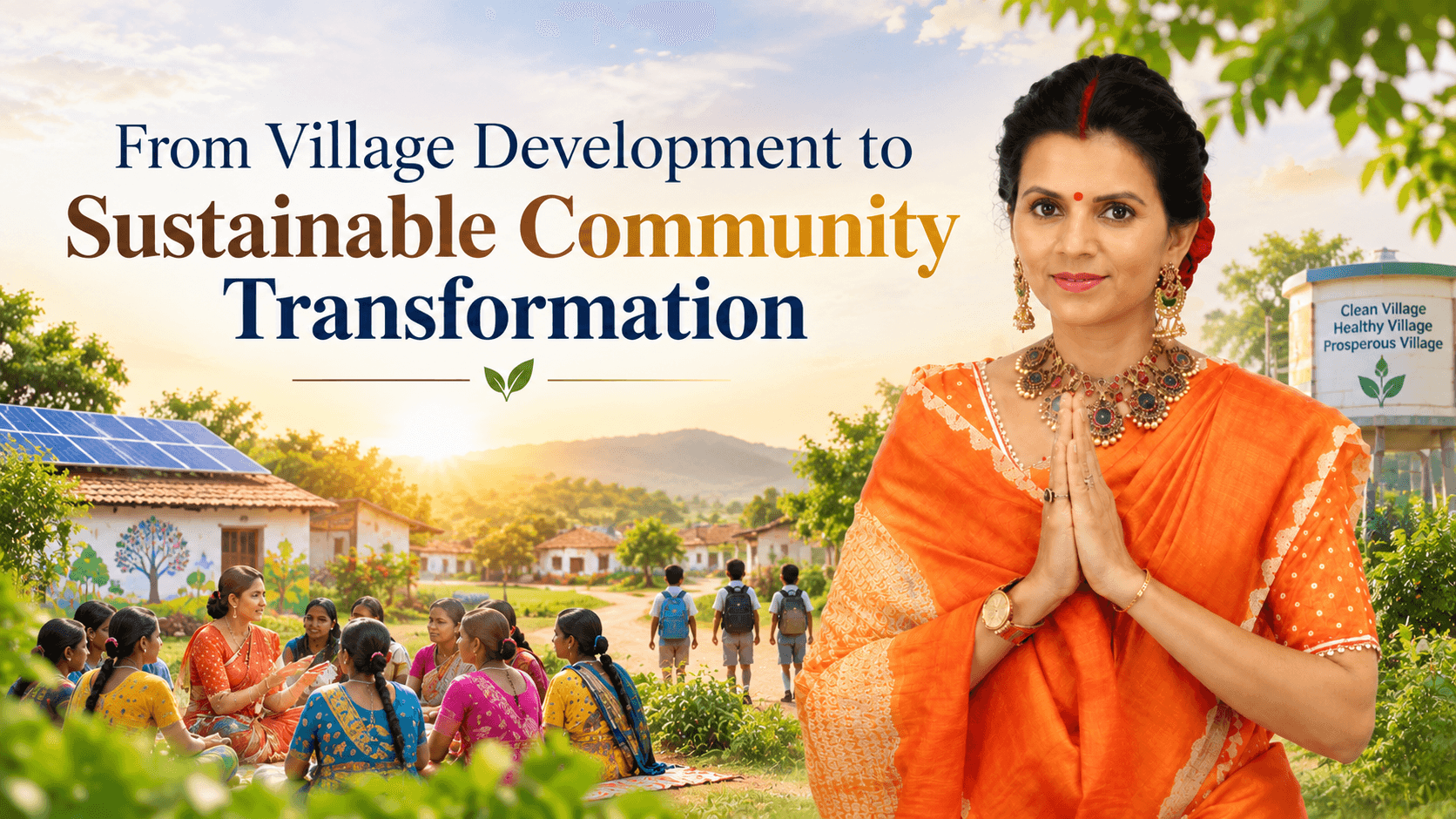
A village is more than a collection of homes, roads, farms, and public buildings. It is a living community shaped by people, relationships, local resources, traditions, aspirations, and opportunities. When a village develops, the real measure of progress should not be limited to physical infrastructure. Sustainable development begins when people gain the knowledge, skills, health, confidence, and opportunities needed to shape their own future.
This is why the idea of Total Village Development Program (TVDP) offers a broader perspective on rural progress. Instead of treating education, healthcare, livelihoods, culture, environment, and social participation as separate concerns, a holistic approach connects them. The objective is not simply to improve a village for a short period but to create conditions in which communities can continue progressing through their own participation and capabilities.
Why Village Development Needs a Broader Vision
Traditional development models often focus on visible improvements. Better roads, electricity, water facilities, schools, and healthcare centres are undoubtedly important. Yet infrastructure alone cannot guarantee long-term community well-being.
Imagine a village with a newly developed facility but limited awareness about how to use it effectively. Without education, skills, participation, and local ownership, the impact may remain limited.
Sustainable transformation requires a wider framework:
- Better access to education
- Stronger healthcare awareness
- Skill development and livelihood opportunities
- Women's participation in economic and social activities
- Youth engagement
- Environmental responsibility
- Community participation
- Cultural and value-based development
- Greater self-reliance
When these areas support one another, development becomes more meaningful. A child who receives quality education may gain better opportunities later in life. A skilled young person can contribute to local economic activity. An empowered woman can strengthen household income and community decision-making. Better healthcare can improve productivity and quality of life.
The result is a development cycle rather than a one-time intervention.
From Basic Development to Community Transformation
There is an important difference between village development and sustainable community transformation.
Village development may begin with solving immediate needs. Community transformation goes further by creating the capacity to address future needs.
For example, providing educational materials can support students today. Developing learning habits, digital literacy, teacher capacity, and community involvement can strengthen education for years to come.
The Role of Education in Rural Transformation
Education remains one of the strongest foundations for community development. It influences not only individual opportunity but also the long-term social and economic direction of a village. Alongside modern academic learning, Vedic education can introduce students to traditional knowledge, ethical values, discipline, cultural awareness, and principles of responsible living.
Rural education initiatives can focus on more than classroom learning. Children and young people also benefit from digital skills, practical knowledge, communication abilities, career awareness, and values that encourage responsibility. A balanced approach that connects contemporary education with India's traditional knowledge systems can help learners develop both practical capabilities and a deeper understanding of their cultural heritage.
Giving Rural Youth a Meaningful Role
Young people represent another major source of community potential.
Rural youth often possess energy, adaptability, and an interest in new technologies and opportunities. Yet without access to appropriate education, skills, mentorship, and career pathways, that potential may remain underdeveloped.
Community development initiatives can encourage young people to participate in:
- Digital learning
- Skill development
- Entrepreneurship
- Environmental activities
- Social service
- Cultural programmes
- Community awareness
- Local innovation
Youth should not be viewed only as beneficiaries of development. They can also become contributors, organisers, volunteers, entrepreneurs, educators, and future community leaders.
When young people see meaningful opportunities within their communities, rural development can become more sustainable.
Protecting the Environment Through Community Action
Rural development and environmental responsibility should move together.
Villages depend closely on land, water, agriculture, animals, forests, and other natural resources. Environmental degradation can therefore directly affect livelihoods and quality of life.
Community-led environmental initiatives can include:
- Village cleanliness
- Water conservation
- Ganga and river awareness
- Natural farming practices
- Tree plantation
- Waste management
- Protection of local ecosystems
- Responsible use of natural resources
- Awareness about sustainable living
Traditional Indian knowledge also contains many ideas about respecting nature and recognising the connection between human life and the natural world.
Combining this cultural understanding with contemporary environmental practices can create a stronger foundation for responsible development.
Culture, Values and Community Identity
Development should not disconnect communities from their cultural identity.
Cultural traditions, local knowledge, festivals, spiritual values, community practices, and intergenerational learning can strengthen belonging. They can also encourage responsibility, compassion, service, and cooperation.
A progressive village does not need to abandon its heritage to embrace new opportunities.
Instead, development can create a bridge between tradition and progress.
This approach allows communities to preserve meaningful cultural values while adopting modern education, technology, healthcare practices, entrepreneurial opportunities, and environmental solutions.
Empowering Women to Strengthen the Community
No rural transformation can be complete without meaningful participation from women. Women empowerment plays an important role in creating stronger families, more confident communities, and sustainable local development.
Women contribute significantly to household management, agriculture, education, caregiving, local economic activity, and community relationships. When women gain access to skills, knowledge, financial opportunities, and decision-making platforms, the benefits can reach entire families and influence the wider community.
Women's empowerment can take many forms:
- Skill development
- Entrepreneurship opportunities
- Financial awareness
- Digital literacy
- Education
- Healthcare awareness
- Leadership development
- Participation in community initiatives
The objective should not simply be to provide temporary assistance. It should be to create pathways through which women can become more confident, capable, and economically active. Access to training, financial knowledge, technology, and local opportunities can help women make informed decisions and contribute more actively to household and community development.
A community becomes stronger when women have the opportunity to participate in shaping its future. By supporting women empowerment alongside education, economic opportunity, healthcare, and community participation, rural development can create lasting and inclusive transformation.
Community Participation Makes Development Sustainable
Perhaps the most important element of sustainable transformation is participation.
External support can initiate change, but communities must eventually become active participants in maintaining and expanding that progress.
Community participation can include:
- Identifying local needs
- Planning development priorities
- Volunteering
- Supporting education
- Participating in health awareness
- Encouraging women's involvement
- Mentoring youth
- Supporting environmental activities
- Preserving cultural practices
- Monitoring local initiatives
When people participate in decisions that affect their lives, they are more likely to develop a sense of ownership.
That ownership can turn a development project into a community movement.
Measuring Progress Beyond Numbers
Sustainable transformation cannot be measured through a single statistic.
A more useful framework can examine several dimensions together:
This kind of framework encourages a broader understanding of progress.
The calculation is not simply “How much infrastructure was created?”
It becomes:
Human Development + Economic Opportunity + Social Participation + Environmental Responsibility + Cultural Strength = Sustainable Community Transformation
Conclusion
Village development becomes truly meaningful when it moves beyond physical improvements and focuses on people, capabilities, opportunity, and long-term community strength. Education can open new pathways, healthcare can improve well-being, skills can support livelihoods, women's participation can strengthen families, youth can drive innovation, and environmental responsibility can protect the resources on which rural communities depend. Together, these elements create the foundation for sustainable transformation.
The broader vision of Total Village Development Program (TVDP) reflects this interconnected approach. By bringing community participation, social service, rural
empowerment, cultural values, education, healthcare, environmental responsibility, and self-reliance into a common development framework, initiatives such as those promoted by Sanatan Sanskrutik Sangh can contribute to a more holistic understanding of rural progress. Sustainable transformation ultimately begins when communities are not simply developed, but empowered to participate in shaping their own future.
Frequently Asked Questions
What does sustainable community transformation mean?
Sustainable community transformation means creating long-term improvements in people's lives while strengthening the community's ability to continue developing independently. It combines social, economic, educational, healthcare, environmental, and cultural development.
Why is a holistic approach important for village development?
Village challenges are interconnected. Education can influence employment, healthcare can influence productivity, women's empowerment can strengthen households, and environmental protection can support livelihoods. A holistic approach addresses these connections rather than treating every issue separately.
What is the role of TVDP in rural development?
A Total Village Development Program can provide a framework for looking at village development from multiple dimensions, including education, healthcare, skills, self-reliance, women and youth empowerment, environment, culture, and community participation.
How can rural youth contribute to community development?
Youth can contribute through education, skill development, entrepreneurship, volunteering, digital initiatives, environmental activities, cultural programmes, and local leadership.
Why is women's empowerment important for rural communities?
Women play important roles in households and communities. Access to education, skills, economic opportunities, healthcare awareness, and leadership can increase women's participation and create wider benefits for families and communities.