
Turn the Hob Off Early: Cooking With Residual Heat in Cast Iron

Written By
Admin
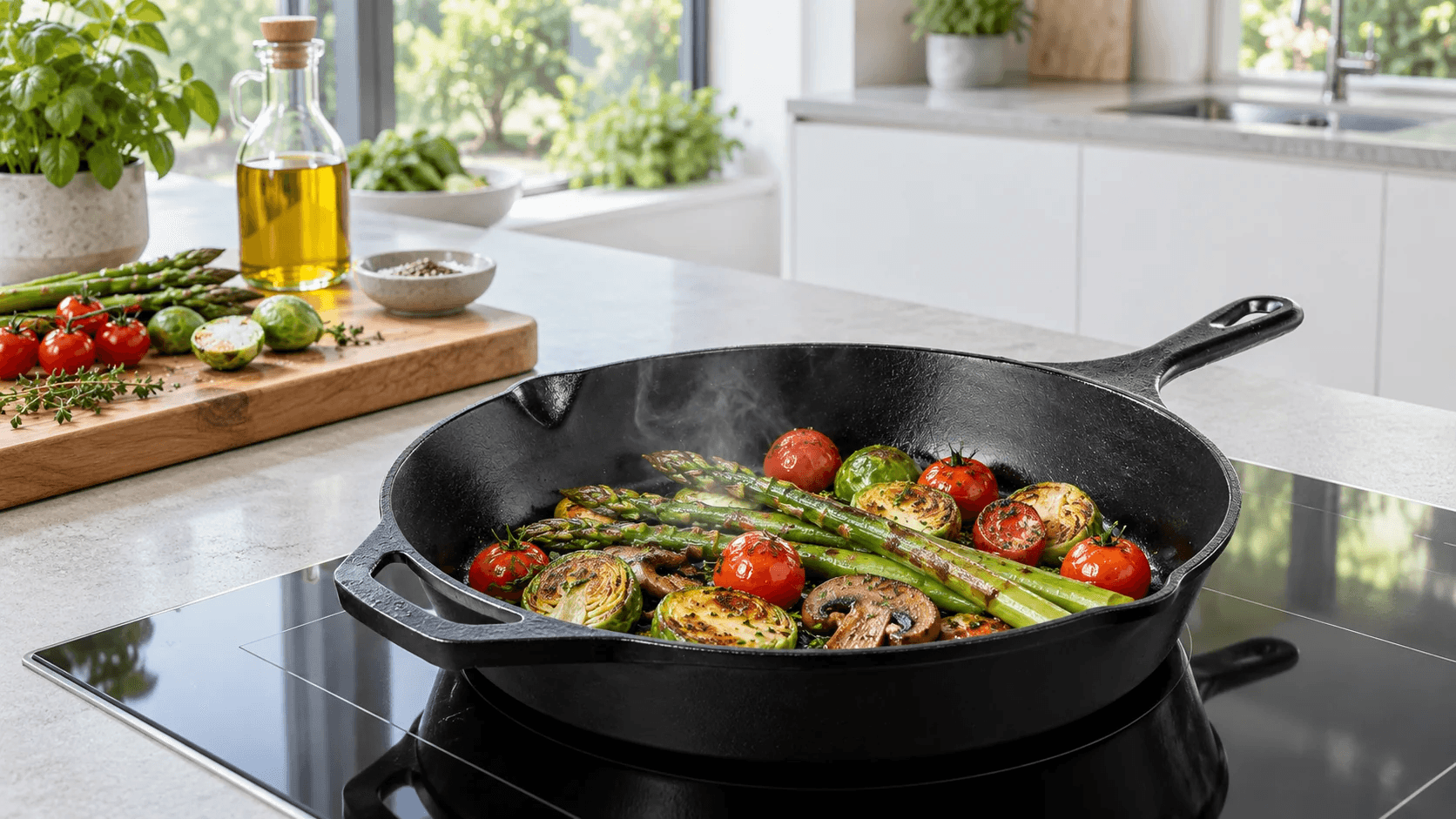
Cooking efficiently does not always mean keeping the hob switched on until the last minute. Cast iron cookware is known for retaining heat long after the heat source has been turned off, making it useful for recipes that benefit from gentle, continued cooking. By learning how to use residual heat, home cooks can reduce unnecessary energy use, manage cooking temperatures more effectively, and make better use of their cookware.
Residual heat cooking is a simple technique, but it requires an understanding of how cast iron behaves. The pan continues transferring stored heat to food after the burner is switched off, although the amount of time it stays hot depends on the cookware, the recipe, the quantity of food, and the surrounding temperature. With the right approach, this technique can help with everyday meals without compromising flavour or food safety.
What Is Residual Heat Cooking?
Residual heat cooking means allowing food to continue cooking with the heat already stored in the cookware after the hob has been turned off. Instead of supplying heat continuously, you let the temperature decrease naturally while the food finishes cooking.
Cast iron is particularly suitable for this method because it has a relatively high heat capacity. Once a cast iron pan has been heated, it stores energy and releases it gradually. This is one reason cast iron is popular for searing, frying, simmering, and preparing dishes that benefit from stable temperatures.
The technique is different from simply leaving a pan on a low burner. When the hob is switched off, the cookware gradually loses heat to the food and surrounding air. The remaining heat may be sufficient to finish certain dishes, but it cannot guarantee a particular cooking temperature or cooking time.
For example, a pan of sautéed vegetables may need only a short period of additional cooking after the heat is turned off. A thick stew, however, may require continued heating to reach the desired temperature safely. Knowing which foods suit residual heat is essential for getting reliable results.
Why Cast Iron Holds Heat So Well
Cast iron cookware is valued for its ability to retain heat rather than for heating up instantly. It generally takes longer to preheat than lightweight pans, but once warm, it can maintain a relatively stable temperature when food is added.
This property is especially useful when cooking ingredients that release moisture or cool the pan when they come into contact with the cooking surface. A hot cast iron skillet can help maintain the conditions needed for browning and frying.
When the heat source is switched off, the stored energy does not disappear immediately. The pan continues releasing heat into the ingredients, which may allow some foods to finish cooking without further energy input.
The thickness and mass of the cookware influence how much heat it stores. A heavy cast iron Dutch oven may retain heat differently from a smaller skillet, while the amount of food inside also affects how quickly the temperature changes.
However, cast iron does not maintain one temperature indefinitely. It cools over time, and the cooling rate depends on the environment and the food being prepared. Residual heat should therefore be treated as a useful cooking aid rather than a substitute for proper temperature control.
Which Foods Work Best With Residual Heat?
The most suitable foods are those that need a short finishing period or benefit from gentle heat after the main cooking stage. The ideal approach depends on the recipe and how thoroughly the ingredients have already cooked.
Sautéed Vegetables
Vegetables such as courgettes, mushrooms, peppers, and spinach can sometimes finish cooking using residual heat. Once they have softened sufficiently, switching off the hob may help prevent them from becoming too soft.
This technique is particularly useful when preparing vegetables that should retain some texture. Keep the ingredients moving when necessary and monitor their condition rather than assuming that the pan's stored heat will produce the same result every time.
Eggs and Delicate Ingredients
Eggs can continue cooking even after the heat source has been switched off. Scrambled eggs, for example, may benefit from being removed from direct heat slightly before they reach their preferred texture.
A cast iron pan can remain hot enough to overcook eggs if they are left inside too long. Transfer them to a serving plate when they reach the desired consistency, rather than relying on the pan to cool quickly.
For dishes containing eggs that require thorough cooking, make sure they reach a safe temperature before serving.
Sauces and Small Portions
Some sauces can benefit from a short period of residual heat once the main cooking process is complete. This may be helpful when finishing a sauce, warming ingredients together, or allowing flavours to combine.
However, sauces containing dairy, eggs, or other temperature-sensitive ingredients require appropriate handling. If a recipe depends on a specific temperature, follow its instructions instead of relying entirely on the stored heat in the cookware.
Rice, Grains, and Simmered Dishes
Some grain dishes use a covered resting period after the main heat has been turned off. A heavy pan can help maintain warmth during this stage, allowing moisture to distribute more evenly.
The method only works when the food has already received sufficient cooking. Rice, grains, and other ingredients should not be assumed to be fully cooked simply because they have remained in a warm pan. Follow the recipe's liquid ratios, cooking instructions, and food safety recommendations.
How to Use Residual Heat Without Overcooking Food
The key to successful residual heat cooking is timing. Switching off the hob too early may leave ingredients undercooked, while leaving delicate foods in the pan for too long can affect their texture.
Start by following the recipe until the food is close to its desired level of doneness. For dishes that tolerate gentle finishing heat, switch off the hob near the end of cooking and monitor the results.
Remember that cast iron remains hot even after the burner has been turned off. If you are cooking eggs, fish, or other delicate ingredients, moving the pan away from the hot zone may help limit further cooking. This is especially relevant on electric and radiant glass cooktops, where the heating element or cooking surface can also remain hot.
On gas cooktops, the flame stops supplying heat immediately when switched off, but the pan still holds its stored energy. Induction systems usually stop transferring energy when switched off, although the cookware and hob surface may remain hot.
Avoid using maximum heat throughout the cooking process just to finish quickly. Gradual preheating and suitable temperature settings can help create a more controlled cooking environment and make residual heat easier to manage.
Can Residual Heat Help Reduce Energy Use?
Yes, using residual heat can reduce the amount of time a hob needs to remain active for suitable recipes. Turning off the heat shortly before a dish is finished allows the energy already stored in the cookware to continue doing useful work.
The actual savings depend on the cooking method, the hob, the pan, and the recipe. There is no universal time that applies to every meal, and switching off too early may require reheating or extending the cooking process.
A practical approach is to identify recipes with a short finishing stage. For example, you may be able to switch off the heat near the end of sautéing vegetables or allow certain foods to rest in a warm pan after cooking.
For long-simmered dishes, do not turn off the hob early if the recipe requires sustained heating to reach a safe internal temperature or achieve the intended result. Energy efficiency should complement proper cooking rather than replace it.
Does the Cooking Method Matter?
Residual heat behaves differently depending on the type of hob, but the cookware itself remains the main factor once the heat source is switched off.
Gas burners respond quickly when turned off because the flame disappears. The cast iron pan then continues releasing its stored heat.
Electric and radiant glass cooktops may cool more slowly because the heating element or surface retains heat as well. This means the pan may continue receiving some heat from the hob after the control has been switched off.
Induction transfers energy to compatible cookware through an electromagnetic field. When induction power stops, the field no longer supplies cooking energy, but the cast iron remains hot. This can make residual heat useful for finishing suitable dishes.
Regardless of the cooktop, avoid assuming that all pans cool at the same rate. A heavy skillet, a deep Dutch oven, and a shallow pan will behave differently depending on their size, construction, and contents.
Safety Tips for Cooking With Residual Heat
Residual heat can improve cooking efficiency, but it does not remove the need for safe handling and proper food preparation.
Always use dry oven mitts or suitable heat-resistant protection when handling hot cast iron. The handle may remain hot long after the hob is switched off, so never assume that the pan is safe to touch simply because the flame or heating indicator is off.
Use a heat-resistant trivet when placing hot cookware on a worktop or dining table. Avoid sliding heavy cast iron across glass or ceramic cooktops because doing so can scratch the surface.
Food safety is equally important. Meat, poultry, seafood, eggs, and leftovers may require specific internal temperatures or handling procedures. Use a food thermometer where appropriate, and do not rely on residual heat alone to make undercooked food safe.
If you are keeping cooked food for later, follow established guidance for safe holding, cooling, and refrigeration. A warm cast iron pan is not a substitute for maintaining food at a safe temperature.
Choosing Cast Iron for Everyday Cooking
The right cookware can make residual heat easier to use. A cast iron skillet is useful for vegetables, eggs, and smaller meals, while a deeper pot or Dutch oven may be better for stews, braises, and dishes that need to remain warm during serving.
Consider the pan's weight, size, depth, and compatibility with your hob. A suitable cooking surface and gradual preheating can help prevent excessive temperature differences and improve the consistency of results.
If you are comparing different cookware styles, explore the available options here.
https://utopia.co.uk/collections/cast-iron
Choose cookware that matches the types of meals you prepare regularly, and always check the manufacturer's guidance for heating, handling, and cleaning.
Final Thoughts
Turning the hob off early can be a practical way to make better use of cast iron's heat-retaining properties. Vegetables, eggs, certain sauces, and some grain dishes may benefit from a short finishing period when the heat source is switched off at the right moment.
The most important factor is knowing when residual heat is sufficient and when continued heating is necessary. Cast iron cools gradually, but the results depend on the recipe, the cookware, and the amount of food in the pan.
By learning how your cookware behaves, monitoring food carefully, and following safe cooking practices, you can use residual heat more effectively in everyday meals. This simple technique can help reduce unnecessary heating while making the most of durable cast iron cookware.