
How Fire Alarm Systems Help Protect Commercial Properties

Written By
Admin
Commercial properties such as offices, retail stores, warehouses, restaurants, and industrial facilities face different fire safety risks every day. Electrical faults, overheated equipment, improper storage of flammable materials, and kitchen accidents can all lead to unexpected fires. Even a small fire can quickly become a serious emergency when people do not receive timely warnings or cannot follow an effective evacuation plan. For this reason, fire prevention and early detection should remain important priorities for every business owner and property manager.
Fire alarm systems play a vital role in protecting commercial buildings by detecting potential fire conditions and alerting occupants before the situation becomes more dangerous. These systems help businesses respond quickly, reduce the risk of injuries, and limit potential property damage. When property owners combine suitable fire detection equipment with regular maintenance and clear emergency procedures, they can create a safer environment for employees, customers, visitors, and contractors.
Why Fire Alarm Systems Matter in Commercial Buildings
A commercial building may contain dozens or even hundreds of people at different times of the day. Some properties also include storage areas, electrical rooms, production equipment, and other spaces where a fire could spread before anyone notices it. Relying only on visual observation or individual smoke detectors may not provide sufficient protection for a complex building.
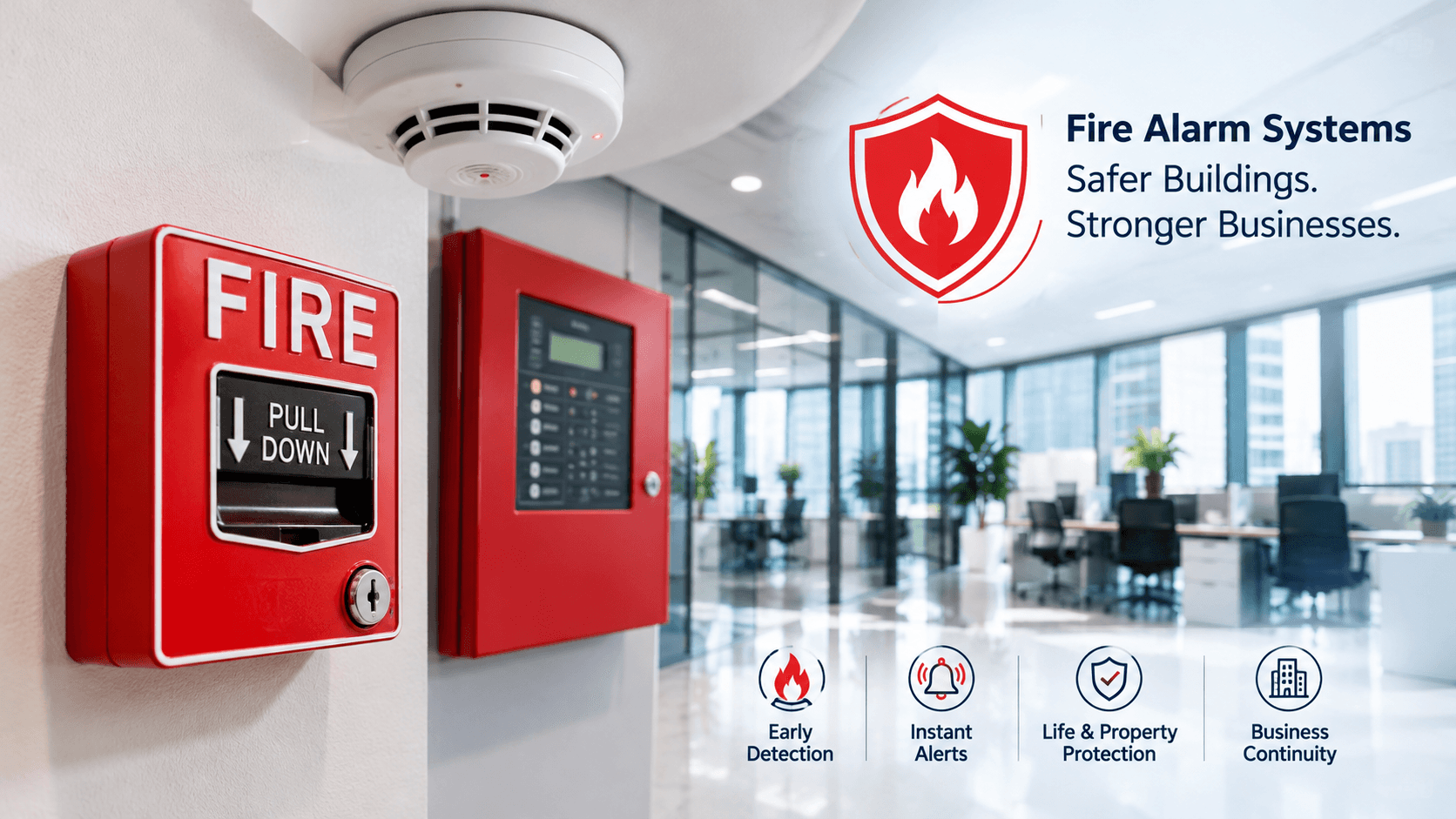
A properly designed fire alarm system provides an organized method of detecting potential fire conditions and communicating warnings throughout the property. Depending on the building's needs, the system may include smoke detectors, heat detectors, manual pull stations, notification appliances, and a central control panel.
How Fire Alarm Systems Help Protect Commercial Properties
1. Early Detection of Potential Fires
Early detection gives occupants more time to react when a fire begins. Smoke detectors identify smoke under suitable operating conditions, while heat detectors respond to temperature changes or predefined heat thresholds, depending on their design.
Different commercial environments require different detection approaches. An office may benefit from smoke detection in occupied spaces, while certain industrial or dusty environments may require carefully selected equipment to reduce unwanted alarms.
2. Faster Warnings for Employees and Visitors
Detecting a fire is only one part of an effective safety strategy. Occupants must also receive a clear warning that allows them to respond quickly.
Fire alarm systems may use audible alarms, visual notification devices, or a combination of both. These notifications help alert people who are working in separate rooms, moving through corridors, or visiting unfamiliar parts of a building.
3. More Organized Emergency Evacuations
A fire alarm gives occupants a signal to follow established emergency procedures. Instead of waiting for instructions from a colleague or investigating the source of an unusual smell, employees can respond according to the property's evacuation plan.
Businesses should establish clear exit routes, identify designated assembly areas, and explain how employees should assist visitors. Staff should understand which routes to use and why they should never use elevators during a fire emergency unless the building has specifically designed and approved evacuation arrangements.
Different Types of Fire Alarm Systems for Commercial Properties
Choosing suitable fire detection equipment requires an understanding of the building's size, use, occupancy, and fire risks.
Conventional Fire Alarm Systems
Conventional systems divide a building into detection zones. When an alarm activates, the control panel indicates the affected zone, helping personnel identify the general location of the potential fire.
These systems may suit certain smaller or less complex properties, depending on the design requirements. However, a zone indication may not identify the precise detector that triggered the alarm.
Burglar Alarm Systems
A burglar alarm is a security system designed to detect unauthorized entry into homes, offices, and commercial properties. It uses sensors, motion detectors, and door or window contacts to identify suspicious activity and trigger an alert. These systems help property owners respond quickly to potential security threats and improve overall property protection.
Cisco Fire Security helps businesses explore security solutions that support safer commercial environments. Installing a suitable burglar alarm system can strengthen entry-point security, help deter intruders, and provide greater peace of mind for business owners and property managers.
The most appropriate choice depends on the building's requirements, applicable regulations, and professional design recommendations.
Wireless Fire Alarm Systems
Wireless systems communicate between compatible devices without requiring every device to connect through conventional signal wiring. They may offer installation flexibility in certain existing buildings or renovation projects.
However, wireless equipment still requires appropriate power supplies, communication reliability, testing, and maintenance. Property owners should confirm that any proposed system meets the relevant fire safety requirements for the building.
Important Areas to Consider During Fire Alarm Planning
Building Layout and Occupancy
The location of detectors, manual pull stations, notification devices, and control equipment should reflect the property's layout and intended use. High ceilings, enclosed rooms, partitions, airflow, and changes in building occupancy can affect detection and notification performance.
A qualified professional can assess these conditions and develop a suitable design.
Electrical and Equipment Rooms
Electrical rooms, server areas, and equipment spaces may contain potential ignition sources or valuable assets. Appropriate detection and notification arrangements can help identify dangerous conditions, although the correct equipment depends on the specific hazards present.
Kitchens and Storage Areas
Commercial kitchens may produce steam, heat, and cooking particles that affect detector selection. Warehouses may contain combustible packaging or other materials that influence fire development.
Professionals should select and position detection equipment according to the environment rather than applying the same design to every room.
Compliance With Applicable Codes
Commercial property owners should confirm that their systems meet applicable building codes, fire codes, inspection requirements, and local authority requirements. In the United States, requirements may involve adopted editions of the National Fire Protection Association standards, including NFPA 72, as well as relevant local regulations.
Requirements vary by jurisdiction and building type, so property owners should consult the appropriate authorities and qualified fire protection professionals.
Maintaining Fire Alarm Systems for Reliable Performance
Installing a fire alarm system is only the first step. Routine inspection, testing, and maintenance help confirm that the equipment remains capable of performing its intended functions.
Businesses should follow the manufacturer's instructions, applicable codes, and the inspection and testing schedule established for their property.
Important maintenance practices include:
- Arranging inspections and functional tests through qualified personnel.
- Checking control panels for trouble signals and unresolved faults.
- Confirming that notification devices operate as intended.
- Keeping detectors and manual pull stations accessible and unobstructed.
- Investigating repeated unwanted alarms instead of ignoring them.
- Documenting inspections, repairs, testing, and system changes.
- Ensuring that renovations do not interfere with detector coverage or alarm audibility.
- Training responsible staff to recognize system alerts and follow emergency procedures.
Property managers should never disable a fire alarm system or leave it impaired without following the required safety procedures. If a system develops a fault, qualified personnel should assess the problem and arrange appropriate corrective action.
Frequently Asked Questions
1. Why does a commercial property need a fire alarm system?
A fire alarm system helps detect potential fire conditions and warn occupants so they can follow emergency procedures. It supports life safety and can help reduce the consequences of a fire when combined with suitable prevention, evacuation, and emergency response measures.
2. How often should a commercial fire alarm system be inspected?
Inspection and testing frequency depends on applicable codes, the system's design, manufacturer instructions, and local requirements. Property owners should establish a documented schedule with qualified fire protection professionals and complete all required tests.
3. Can a fire alarm system prevent a fire from starting?
A fire alarm system primarily detects potential fire conditions and warns occupants. It does not normally prevent ignition. Fire prevention requires additional measures, including safe electrical practices, equipment maintenance, appropriate storage, and hazard management.
4. What is the difference between a conventional and an addressable fire alarm system?
A conventional system generally identifies the zone where an alarm occurs, while an addressable system can provide more specific information about the individual device reporting the event. The right option depends on the property's size, complexity, and safety requirements.
5. What should employees do when a fire alarm activates?
Employees should follow the property's emergency procedures, leave through designated safe routes, and proceed to the assigned assembly point. They should not investigate a suspected fire or re-enter the building until authorized personnel confirm it is safe.
Conclusion
Fire alarm systems play an essential role in protecting commercial properties by detecting potential fire hazards, alerting occupants, supporting timely evacuations, and helping reduce the risk of injuries and property damage. Selecting the right system, maintaining detection devices, conducting regular inspections, and following clear emergency procedures can significantly improve workplace safety. Businesses should also consider their building layout, occupancy, equipment, and applicable fire safety regulations when planning or upgrading their systems. A proactive approach to fire protection helps property owners improve emergency preparedness and maintain a safer environment for employees, customers, and visitors.
Cisco Fire Systems helps businesses explore fire protection and security solutions designed to support the safety of commercial properties. From fire alarm systems to broader building security needs, choosing suitable equipment and maintaining it properly are important steps toward reliable protection. Businesses can benefit from assessing their existing infrastructure, identifying potential safety gaps, and consulting qualified professionals to determine the most appropriate solutions for their properties. With careful planning and consistent maintenance, commercial property owners can strengthen their fire safety measures and support long-term building protection.