
How to Apply for a Resident Return Visa Australia Successfully

Written By
Admin
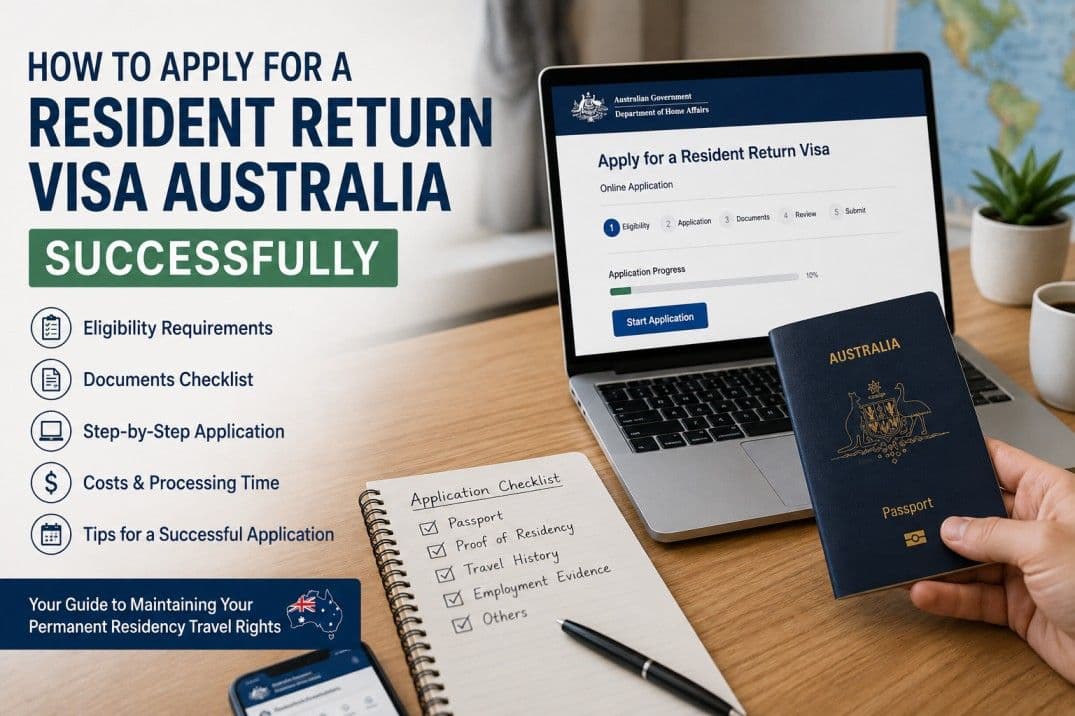
If you're an Australian permanent resident planning to travel overseas or return after spending time abroad, ensuring you have valid travel rights is essential. While permanent residency itself does not expire, the travel facility attached to your visa does. If that travel facility has expired or is about to expire, you may need a resident return visa Australia to re-enter the country and maintain your permanent resident status.
Applying for a Resident Return Visa (RRV) is generally straightforward if you meet the eligibility requirements and prepare your application carefully. This guide explains the application process, required documents, eligibility criteria, processing times, and practical tips to improve your chances of success.
What Is a Resident Return Visa?
A Resident Return Visa (RRV) allows eligible Australian permanent residents and certain former permanent residents to return to Australia after travelling overseas.
The visa restores your ability to travel internationally while retaining your permanent resident status. Depending on your circumstances, you may receive a travel facility that remains valid for several months or up to five years.
Without a valid travel facility, returning to Australia as a permanent resident may become difficult after international travel.
Who Can Apply?
To qualify for a Resident Return Visa, applicants generally must:
- Be an Australian permanent resident or former permanent resident.
- Hold or have previously held an eligible permanent visa.
- Meet Australia's residency requirements or demonstrate substantial ties to Australia.
- Satisfy any applicable character requirements.
Every application is assessed based on the applicant's individual circumstances and supporting evidence.
Understanding the Residency Requirement
One of the most important factors when applying is the amount of time you have spent in Australia.
Generally, applicants who have lived in Australia for at least two years during the previous five years are more likely to qualify for a longer travel facility.
If you have not met this residency requirement, you may still be eligible if you can demonstrate substantial ties to Australia, including:
- Employment ties.
- Business interests.
- Family connections.
- Cultural or community involvement.
These ties should provide an ongoing benefit to Australia.
Documents You'll Need
Preparing complete documentation before lodging your application can help reduce delays.
Common documents include:
- Valid passport.
- Evidence of permanent residency.
- Previous Australian visa details.
- Identity documents.
- Travel history.
- Proof of residence in Australia.
- Employment records.
- Business documents where applicable.
- Evidence of family or community ties.
- Supporting documents demonstrating substantial ties if required.
Additional documentation may be requested depending on your personal circumstances.
Step-by-Step Application Process
Following a structured approach can help ensure your application is complete.
Step 1: Check Your Eligibility
Review the eligibility requirements before applying.
Confirm that you satisfy either the residence requirement or the substantial ties requirement.
Step 2: Gather Supporting Documents
Collect all required identity, travel, employment, and residency documents.
Ensure every document is genuine, complete, and clearly legible.
Step 3: Complete the Online Application
Applications are generally submitted through the Australian Government's online immigration portal.
Provide accurate information and upload all supporting documents.
Before submitting, carefully review your application for errors or missing information.
Step 4: Pay the Application Fee
Pay the applicable government visa application charge using an approved payment method.
Retain a copy of your payment confirmation for future reference.
Step 5: Monitor Your Application
After submission, monitor your online account regularly.
The Department of Home Affairs may request additional documents or clarification during assessment.
Respond promptly to avoid unnecessary processing delays.
Step 6: Receive Your Visa Decision
Once the assessment is complete, you'll receive notification of the outcome.
If granted, your Resident Return Visa will restore your ability to travel internationally while maintaining your permanent resident status.
Processing Time
Processing times vary depending on several factors, including:
- Completeness of your application.
- Quality of supporting evidence.
- Verification of travel history.
- Individual circumstances.
- Overall application volumes.
Applications containing complete and well-organised documentation are often processed more efficiently.
Costs to Consider
When applying for a Resident Return Visa, applicants should budget for:
- Government visa application charges.
- Document certification if required.
- Translation costs for non-English documents.
- Passport renewal expenses where necessary.
Government fees may change over time, so it's important to check the latest charges before lodging your application.
Common Reasons for Delays or Refusal
Although many applications are approved, delays or refusals can occur if applicants fail to provide sufficient evidence.
Common reasons include:
- Incomplete applications.
- Missing supporting documents.
- Insufficient evidence of residence.
- Failure to demonstrate substantial ties.
- Incorrect or inconsistent information.
- Delayed responses to requests from the Department.
Carefully reviewing your application before submission can significantly reduce these risks.
Tips for a Successful Application
To improve your chances of approval:
- Apply before your travel facility expires whenever possible.
- Ensure your passport is valid.
- Keep copies of every document you submit.
- Organise your supporting evidence clearly.
- Provide detailed information about your ties to Australia if required.
- Respond quickly to requests for additional information.
- Double-check every section of your application before submitting.
Many applicants also choose to seek advice from an experienced migration consultant in Australia to better understand the eligibility requirements and prepare a strong application.
Why Applying Early Is Important
Waiting until the last minute can complicate your travel plans, especially if additional information is requested during processing.
Applying well before your planned departure or return date provides enough time to resolve any issues and reduces the risk of travel disruptions.
Planning also allows you to gather stronger supporting evidence if your circumstances require additional documentation.
Final Thoughts
Applying for a resident return visa Australia is an important step for permanent residents who wish to continue travelling internationally while protecting their ability to return to Australia. By understanding the eligibility requirements, preparing complete documentation, and following the correct application process, you can improve your chances of a successful outcome.
Whether you're returning after living overseas or simply renewing your travel facility before your next trip, careful preparation and timely submission can help ensure a smooth application process and give you confidence when planning your future travel.