Understanding Pneumatic, Electric, and Diaphragm Control Valves

Written By
Admin
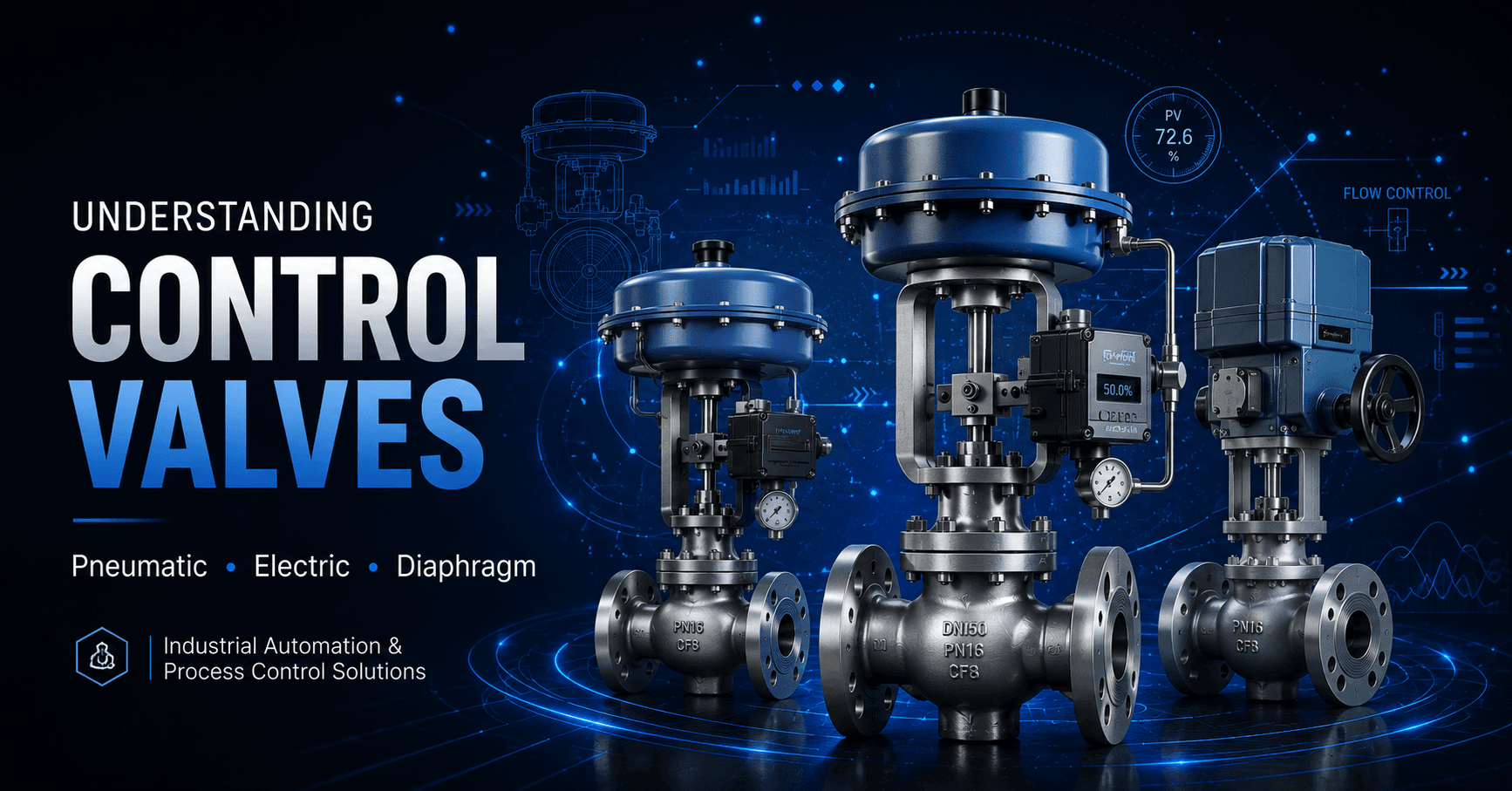
In modern industrial processes, maintaining precise control over flow, pressure, temperature, and fluid levels is essential for achieving efficiency, safety, and product quality. A Control Valve is one of the most important components used in automated process control systems. It regulates the flow of liquids, gases, steam, and other process media by adjusting its opening according to signals received from a controller.
Industries such as oil and gas, chemical processing, pharmaceuticals, food manufacturing, water treatment, and power generation depend heavily on a reliable Control Valve to maintain stable operating conditions. Among the various types available, Pneumatic, Electric, and Diaphragm Control Valves are widely used due to their performance, accuracy, and versatility.
This article explains the working principles, advantages, and industrial applications of these popular Control Valve types.
What Is a Control Valve?
A Control Valve is a mechanical device designed to regulate the flow rate and pressure of fluids within a process system. It acts as the final control element in a control loop by responding to signals from a controller and adjusting the valve position accordingly.
The primary purpose of a Control Valve is to ensure that process variables remain within desired operating limits. By providing precise flow regulation, these valves improve process stability, energy efficiency, and overall plant performance.
Importance of Control Valve Systems
Industrial processes require accurate control of process conditions to achieve maximum productivity and safety. A properly selected Control Valve helps:
- Maintain stable process conditions
- Improve product quality
- Reduce energy consumption
- Enhance automation efficiency
- Minimize equipment wear
- Increase plant reliability
Because of these benefits, every automated facility relies on a dependable Control Valve system.
Pneumatic Control Valve
A Pneumatic Control Valve uses compressed air to operate the actuator and regulate valve movement. It is one of the most common valve types used in industrial automation.
How It Works
The actuator receives an air pressure signal from a controller. Based on the signal, the actuator moves the valve stem, adjusting the valve opening and controlling fluid flow.
Pneumatic systems are known for their quick response times and excellent reliability in demanding industrial environments.
Advantages of Pneumatic Control Valve
- Fast operating speed
- Reliable performance
- Suitable for hazardous environments
- Low maintenance requirements
- Ideal for continuous operation
Applications
A Pneumatic Control Valve is widely used in:
- Oil and gas plants
- Refineries
- Chemical industries
- Power stations
- Water treatment facilities
Its ability to perform effectively under harsh conditions makes it a preferred choice for industrial automation systems.
Electric Control Valve
An Electric Control Valve utilizes an electric actuator to control valve positioning. These valves are increasingly popular in modern facilities due to their precision and compatibility with digital automation systems.
How It Works
The actuator receives electrical signals from the control system and converts them into mechanical movement. This movement adjusts the valve opening and regulates flow according to process requirements.
Electric actuators offer excellent positioning accuracy and can easily integrate with PLC, DCS, and SCADA systems.
Advantages of Electric Control Valve
- High control accuracy
- Easy integration with automation systems
- Energy-efficient operation
- Remote monitoring capabilities
- Minimal compressed air requirements
Applications
Electric Control Valve systems are commonly used in:
- HVAC systems
- Water treatment plants
- Food processing industries
- Pharmaceutical manufacturing
- Power generation facilities
These valves are particularly beneficial where precise control and digital communication are required.
Diaphragm Control Valve
A Diaphragm Control Valve uses a flexible diaphragm as the sealing element to regulate fluid flow. This design provides excellent isolation between the process fluid and valve operating components.
How It Works
The diaphragm moves up and down in response to actuator movement. This action opens or closes the flow path, allowing accurate regulation of process media.
The unique design makes the valve suitable for handling corrosive, abrasive, and sanitary fluids.
Advantages of Diaphragm Control Valve
- Excellent leak-tight sealing
- Corrosion resistance
- Suitable for hygienic applications
- Reduced contamination risk
- Low maintenance requirements
Applications
A Diaphragm Control Valve is commonly used in:
- Pharmaceutical industries
- Food and beverage processing
- Biotechnology plants
- Chemical manufacturing
- Water purification systems
Its sanitary design makes it ideal for applications requiring strict cleanliness standards.
Comparing Pneumatic, Electric, and Diaphragm Control Valve Types
Each Control Valve type offers unique benefits depending on process requirements.
Pneumatic Control Valve
Best suited for:
- Fast response applications
- Hazardous environments
- Heavy industrial operations
Electric Control Valve
Best suited for:
- High precision control
- Smart automation systems
- Remote operation applications
Diaphragm Control Valve
Best suited for:
- Corrosive fluids
- Sanitary processes
- Pharmaceutical production
Selecting the right Control Valve depends on factors such as fluid characteristics, operating conditions, control requirements, and industry standards.
Factors to Consider When Selecting a Control Valve
Choosing the correct Control Valve is essential for achieving optimal performance. Important considerations include:
Process Conditions
Evaluate:
- Operating pressure
- Temperature range
- Flow requirements
Fluid Characteristics
Consider:
- Viscosity
- Corrosiveness
- Solid content
- Chemical compatibility
Control Accuracy
The required level of process control influences the type of Control Valve selected.
Maintenance Requirements
Reliable valve designs help reduce maintenance costs and improve system uptime.
Automation Compatibility
Modern facilities often require a Control Valve capable of integrating with digital monitoring and control systems.
Benefits of Modern Control Valve Technology
Advancements in automation and valve design have significantly improved Control Valve performance.
Key benefits include:
- Improved process efficiency
- Enhanced product consistency
- Reduced energy consumption
- Increased operational safety
- Better monitoring capabilities
- Lower lifecycle costs
With smart actuators and digital communication systems, modern Control Valve solutions provide valuable process data that supports predictive maintenance and operational optimization.
Industrial Applications of Control Valve Systems
A Control Valve plays a critical role across multiple industries.
Oil and Gas
Regulates fuel, gas, and process fluid flow.
Chemical Processing
Maintains accurate chemical dosing and reaction control.
Power Generation
Controls steam and cooling water systems.
Water Treatment
Manages water distribution and filtration processes.
Pharmaceutical Manufacturing
Ensures precise flow control for hygienic production environments.
Food and Beverage
Supports sanitary processing and ingredient control.
Conclusion
A Control Valve is an essential component in industrial automation and process control systems. Pneumatic, Electric, and Diaphragm Control Valves each offer distinct advantages depending on the application requirements.
Pneumatic valves provide speed and reliability, Electric valves offer precision and automation compatibility, while Diaphragm valves deliver excellent sealing and sanitary performance. Selecting the right Control Valve can significantly improve process efficiency, product quality, energy savings, and plant reliability.
As industries continue to adopt advanced automation technologies, the importance of a high-performance Control Valve will continue to grow, making it a key element in achieving safe, efficient, and productive operations.